Top 5 WhatsApp Business API Platforms for Smart Chatbots in 2026
Your WhatsApp bot breaks the moment a customer sends a voice note. Many platforms still charge per conversation while their bot builders choke on anything beyond button replies, so teams start hunting for replacements. Com.bot, an Official Meta Business Partner, is one option worth measuring against the rest.
This article gives you the exact criteria for judging a WhatsApp Business API platform in 2026: bot builder depth, automation logic, integrations, and pricing. You will see how Com.bot, Twilio, WATI, Infobip, and AiSensy compare, then match each to your business size and use case so you can commit to one with confidence.
What to Look For in a WhatsApp Business API Platform for Smart Chatbots in 2026
As we move into 2026, the WhatsApp Business API landscape has matured, with platforms offering a wide range of features from no-code bot builders to advanced AI and deep CRM integrations. The channel itself is no longer a novelty. It sits at the center of enterprise messaging strategies for brands that want fast, personal conversations at scale.
The reason is straightforward. WhatsApp counts billions of active users worldwide, and business messaging volume on the platform keeps climbing year over year. Research suggests that customers increasingly prefer messaging over phone calls or email when contacting a brand. That shift makes WhatsApp a primary engagement channel, not a side experiment.
Choosing the right platform matters because the WhatsApp Business Platform is not a single product. Meta governs the underlying API, while official Business Solution Providers (BSPs) wrap it in dashboards, bot tooling, and support. Some platforms lean toward no-code simplicity, others toward developer control. A mismatched choice can slow launches, inflate costs, or cap what your smart chatbots can do.
This section covers the four pillars that separate strong platforms from weak ones: bot builder quality, automation depth, integration breadth, and pricing clarity. The roundup that follows applies these same criteria to each of the top five platforms, so you can compare them on equal footing.
Key Evaluation Criteria: Bot Builder, Automation, Integrations & Pricing
When evaluating WhatsApp Business API platforms for smart chatbots, four pillars stand out: the intuitiveness of the bot builder, the depth of automation, the breadth of integrations, and the transparency of pricing. Each one affects daily operations long after onboarding ends.
Bot builder. Some platforms offer drag-and-drop visual editors where marketing teams assemble flows without code. Others are code-first, exposing the raw API, webhooks, and SDKs for developers. Look for a template library covering common journeys, plus support for message templates, session messages, interactive messages such as quick replies, buttons, and lists, and rich media. Conversational AI features, including natural language understanding, matter if you want bots that handle free-form questions rather than fixed menus.
Automation. Rule-based flows work well for order tracking or appointment booking, where the path is predictable. AI-driven automation suits customer support and lead generation, where intent varies. The strongest setups blend both, routing simple queries to bots and escalating complex ones to human agents with full context.
Integrations. Essential connections include CRM systems, e-commerce platforms, payment links, and helpdesk software. Webhook support and API integration determine how freely data moves between tools. Omnichannel or multichannel capability lets one team manage WhatsApp alongside other channels without switching apps. If a platform cannot connect to your existing stack, your team becomes the integration.
Pricing. Common models include per-message billing, per-user or per-agent seats, and tiered plans based on volume or features. Watch for hidden costs: markup on Meta conversation fees, charges for extra bot flows, onboarding fees, or support priced separately. A quick checklist before committing:
- Does the bot builder match your team's technical skill level?
- Are both rule-based and AI-driven automation supported?
- Do CRM, e-commerce, and payment integrations exist out of the box?
- Is pricing per message, per seat, or tiered, and what sits outside the plan?
- Is there an official BSP relationship with Meta for compliance and reliability?
- Can the platform scale from a pilot to enterprise messaging volume?
Score each platform against these criteria rather than chasing the longest feature list. The right fit depends on your team, your use cases, and your budget, not on raw feature counts.
1. Com.bot - Best Overall
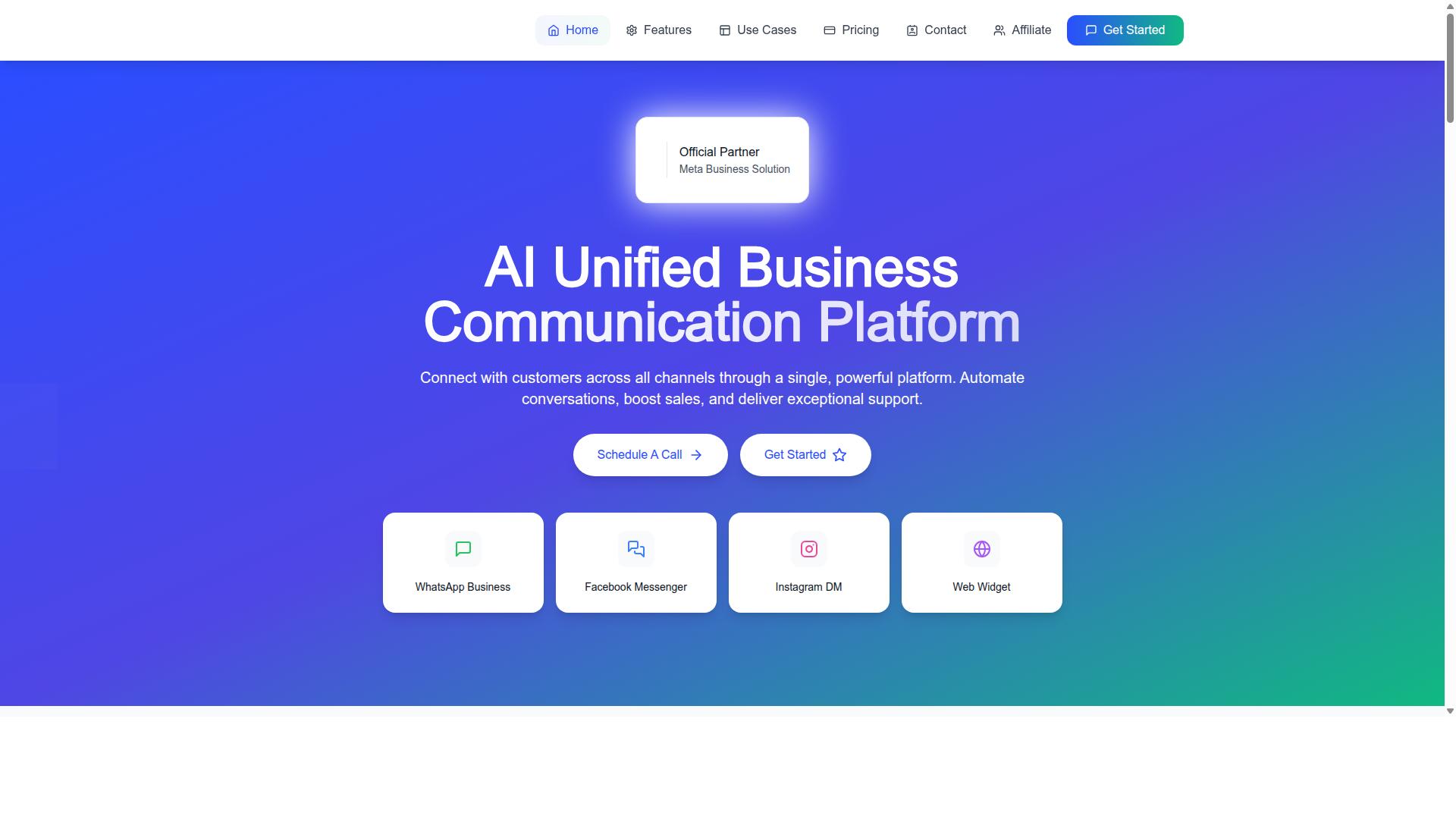
Com.bot emerges as the best overall WhatsApp Business API platform for smart chatbots in 2026, thanks to its comprehensive feature set, official Meta partnership, and proven track record with over 23,000 active customers.
That Meta Business Partner status matters more than it might seem. It means Com.bot operates as an official BSP, giving businesses a direct, compliant path onto the WhatsApp Business Platform without the friction of unofficial workarounds. For teams that need reliable API integration and webhook handling, that foundation is the starting point, not an afterthought.
The scale behind the platform is equally telling. Com.bot processes 25M+ messages per day, supports 100K+ bots created, and counts 100+ government bodies and 500+ global partners among its users. Those numbers point to a platform tested under demanding, high-volume conditions rather than a lightweight tool.
Pricing stays transparent, with WhatsApp messaging billed at actual Meta rates and no markup on conversations. Enterprise security comes with end-to-end encryption, and setup is designed to be quick so teams can move from onboarding to live automation without long delays. The section below breaks down the chatbot builder, integrations, and plan details.
Smart Chatbot Capabilities, Pricing & What Makes It Stand Out
Com.bot's smart chatbot capabilities are anchored by a visual drag-and-drop bot builder that lets businesses create conversational flows without coding, while its pricing starts at just $149 per quarter for the Silver Plan.
The builder supports AI-powered responses and ready-made templates, so teams can launch a working bot quickly and refine it over time. Automation covers the interactive message types that drive real customer engagement on WhatsApp, including quick replies, buttons, and list messages. Media messages and rich media round out the conversational toolkit.
Integrations extend the bot beyond chat. Com.bot connects with CRM, e-commerce, and payment systems, which supports use cases like lead generation, order tracking, appointment booking, and payment links. A unified inbox brings WhatsApp, Facebook, Instagram, and a web widget into one view, giving support teams an omnichannel and multichannel workflow instead of scattered tabs.
Pricing is structured in quarterly tiers, with USD as the base currency:
- Silver Plan: $149 per quarter
- Gold Plan: $349 per quarter (recommended)
- Platinum V1: $2,500 per quarter
Add-ons are priced at $10 per month for items such as an additional team member, a social channel, external actions (per 5,000), bot triggers (per 25,000), and an ecom store. Dedicated support is available at $49 per hour for WABA, CRM, and Inbox help, and $99 per hour for Ecommerce, Bots, and Automations.
What ties it together is native payments, enterprise security with end-to-end encryption, real-time message delivery, and quick setup. Messaging runs at actual Meta rates with no markup, which keeps conversation costs predictable as volumes grow.
2. Twilio
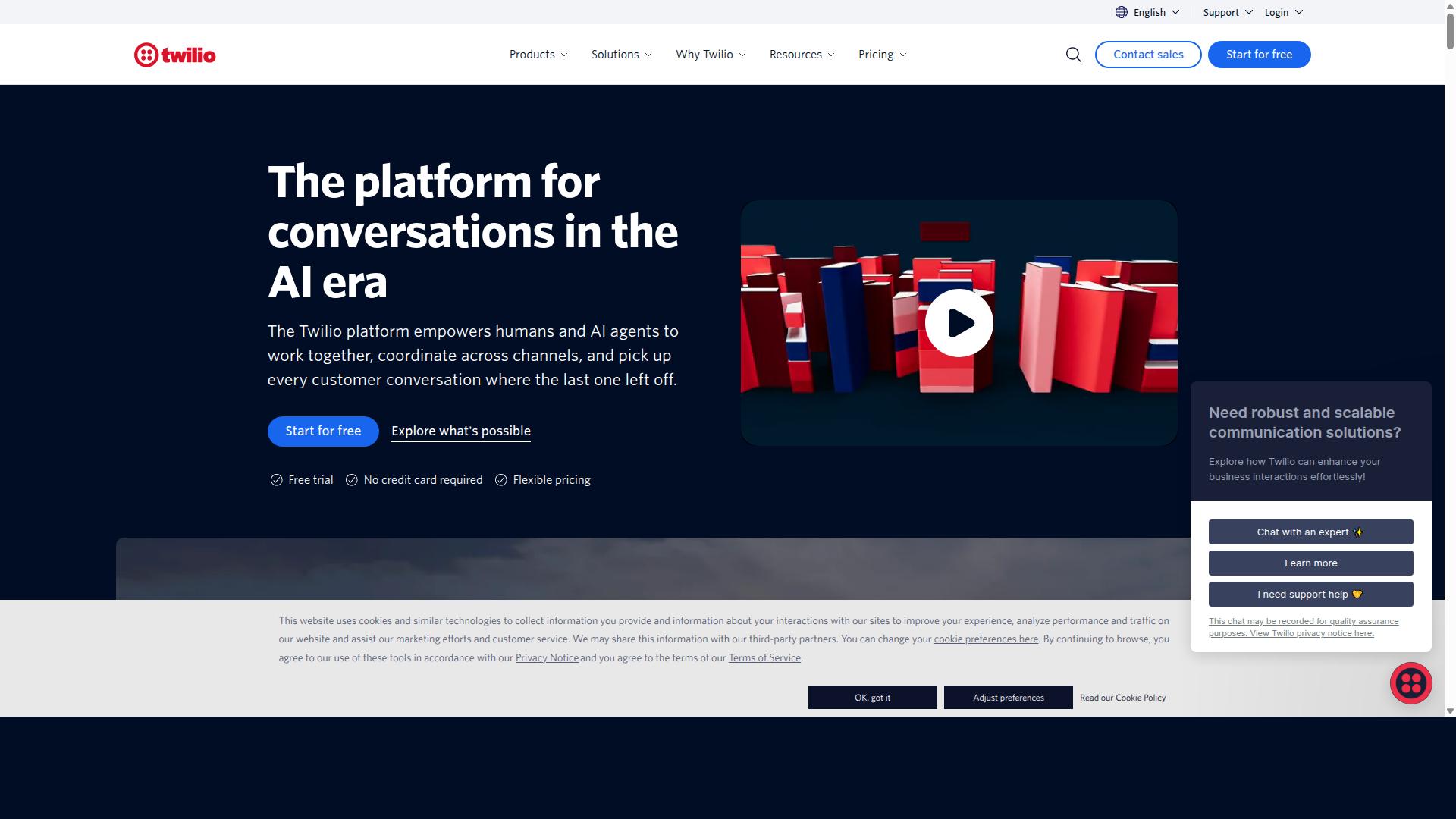
Twilio is a robust, developer-centric platform that offers WhatsApp Business API integration as part of its broader communications suite, making it a strong choice for tech-savvy teams. Rather than packaging WhatsApp as a standalone product, Twilio treats it as one channel inside a wider API ecosystem for voice, SMS, and other messaging routes.
That API-first design gives engineering teams fine-grained control over how conversations are built, routed, and escalated. Businesses that want to blend WhatsApp with existing backend systems tend to value this flexibility, though it comes with a steeper learning curve than simpler chatbot platforms.
Twilio appears regularly among the best WhatsApp API providers for developers. Its Flex platform is often ranked highly for enterprises that need maximum customization, since it supports building tailored contact-center experiences on top of the messaging layer.
For smart chatbots, Twilio pairs with Dialogflow or custom NLP engines. It supports multi-turn context, which can be configured to match specific conversation flows, along with 30+ languages and custom training for intent recognition.
Typical use cases include:
- High-volume customer support across multiple regions
- Omnichannel engagement that mixes WhatsApp with SMS and voice
- Custom conversational AI built on internal NLP models
- Enterprise messaging tied into existing CRM and backend systems
Strengths center on scalability and documentation. The platform is built to handle large message volumes, and its developer resources are widely regarded as thorough. Deployment for custom development with the Flex framework typically runs 2 to 6 weeks, reflecting the implementation investment involved.
Limitations are worth weighing. Twilio assumes in-house development resources, so teams without engineers may find it harder to launch quickly. Pricing follows a consumption model with per-conversation charges layered on top of Meta's conversation fees, which can make cost forecasting more complex than flat-rate alternatives.
Twilio is best suited to enterprises with dedicated developers who want control over every layer of the conversation stack. Smaller teams seeking faster setup may prefer a more guided platform.
3. WATI
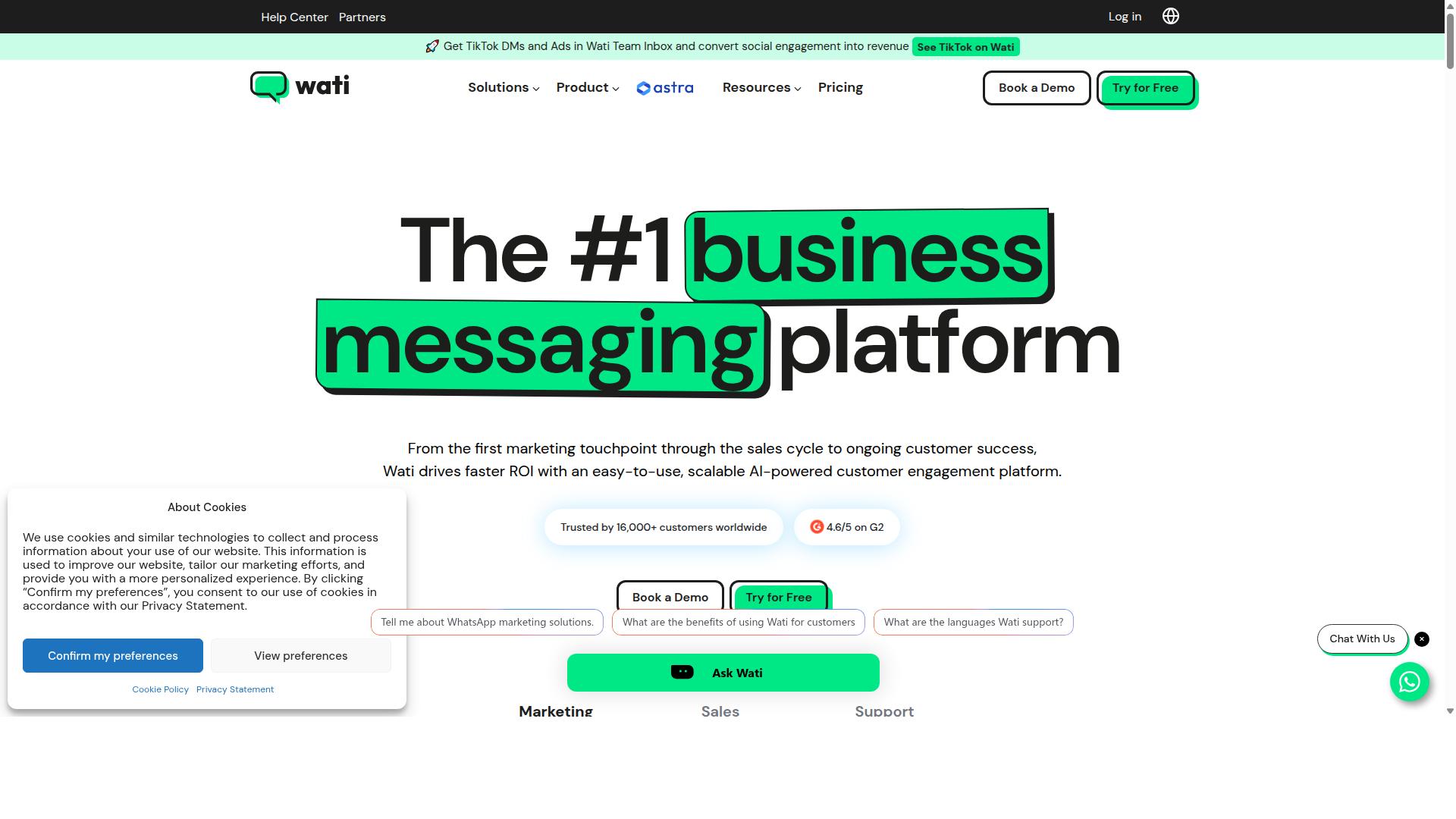
WATI is a user-friendly WhatsApp Business API platform designed for small to medium-sized businesses, with a focus on team collaboration and no-code automation. It has built a strong reputation in the mid-market segment, particularly among SMBs in emerging markets, where simplicity and quick setup often matter more than deep technical control.
For teams that want to move fast without hiring developers, WATI presents a practical entry point into WhatsApp Business API automation. The platform is frequently recommended as a solid fit for smaller operations that need results in days, not months.
Shared team inbox. Multiple agents can manage conversations from a single workspace, assign chats, and track responses. This helps smaller support teams avoid the confusion of juggling several devices or personal WhatsApp accounts.
Template-based chatbot builder. WATI offers a visual flow editor that non-technical users can operate. Businesses can assemble welcome messages, quick replies, buttons, and menu-style lists without writing code. Deployment for these template-based flows typically takes one to three days.
Broadcast campaigns. Teams can send approved message templates to segmented contact lists for promotions, reminders, or updates. This supports lead generation and re-engagement efforts within WhatsApp's policy framework.
E-commerce and CRM integrations. WATI connects with platforms such as Shopify, allowing order tracking, cart recovery, and payment links inside chat. These integrations make it attractive for online sellers handling high volumes of repetitive queries.
Where WATI shows its limits is in advanced scenarios. Its NLP engine is rule-based with only basic machine learning, and multi-turn context is generally limited to around three turns. It supports roughly ten languages and does not offer custom model training.
Concurrent conversation ceilings are also lower than what large enterprises may require. Organizations with complex, high-volume conversational AI needs, or those wanting deeply customized automation, may find the platform constraining as they scale.
For an SMB prioritizing speed, affordability, and ease of use, WATI remains a credible choice in 2026. For enterprises demanding sophisticated NLP and heavy customization, it is better viewed as a starting point than a long-term ceiling.
4. Infobip
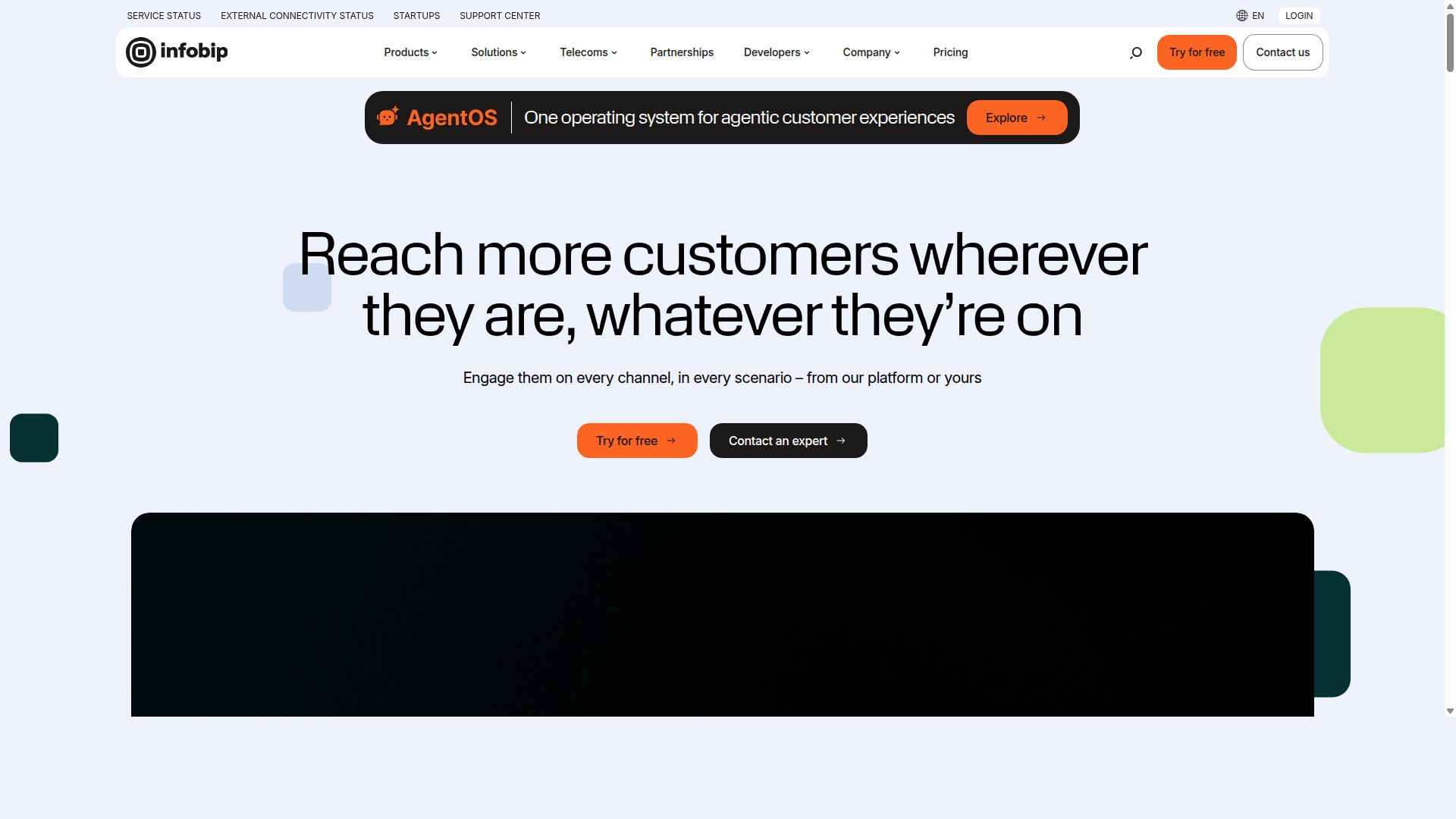
Infobip is an enterprise-grade omnichannel communication platform that includes WhatsApp Business API support, known for its reliability and global scale. Among the providers commonly listed for large organizations, it is often positioned as the pick for enterprises with mission-critical messaging needs.
Rather than treating WhatsApp as a standalone channel, Infobip bundles it into a broader communications stack. That breadth is the core of its appeal for companies that send high volumes of time-sensitive messages across many markets.
Where it stands apart is the depth of its automation layer. The platform pairs programmable channels with tooling aimed at building and orchestrating AI-driven customer journeys, not just sending one-off notifications.
For enterprises weighing conversational AI at scale, that combination of infrastructure and automation is the main draw. The trade-off is that this kind of platform typically demands more budget and more technical setup than lighter chatbot tools.
Key strengths reported for Infobip include:
- Global coverage across a wide range of programmable channels
- Agentic AI platform (AgentOS) for building and running AI agents
- Journey orchestration that connects messaging with customer data
- AI chatbot builder and conversational AI tools
- Cloud contact center and customer data platform capabilities
- Voice AI agents alongside text-based channels
The channel list is extensive. Beyond the WhatsApp API, Infobip supports SMS, RCS, email, MMS, voice, live chat, video, in-app messaging, mobile push, Viber, Messenger, Instagram, and Telegram. That makes it a fit for teams that want one vendor for omnichannel customer engagement rather than stitching together separate tools.
Because a single platform handles so many touchpoints, Infobip suits use cases where consistency matters: order tracking, appointment reminders, payment links, and support conversations that may start on WhatsApp and finish elsewhere. The same infrastructure can carry lead generation flows and transactional alerts without switching systems.
Its fit is clearest for large enterprises and mission-critical messaging. Organizations with complex routing needs, multiple regions, or strict uptime expectations tend to benefit most from this class of provider.
Smaller businesses, by contrast, may find the scope heavier than they need. The same depth that helps a global brand can feel like overhead for a team that mainly wants simple WhatsApp automation.
Two drawbacks come up often with enterprise platforms of this type. Cost tends to be higher, and complexity can slow down teams without dedicated technical resources. Pricing is not publicly stated for Infobip in the sources reviewed here, so buyers should expect to request a quote.
Implementation also usually involves more moving parts: API integration, webhook configuration, message template approvals through Meta, and coordination between marketing, support, and IT. That is normal for enterprise messaging, but it is worth planning for.
In short, Infobip is a credible choice for organizations that prioritize scale, reliability, and advanced automation over simplicity and low entry cost. Teams evaluating WhatsApp Business API chatbot platforms in 2026 should weigh whether they need that full stack or a more focused tool.
5. AiSensy
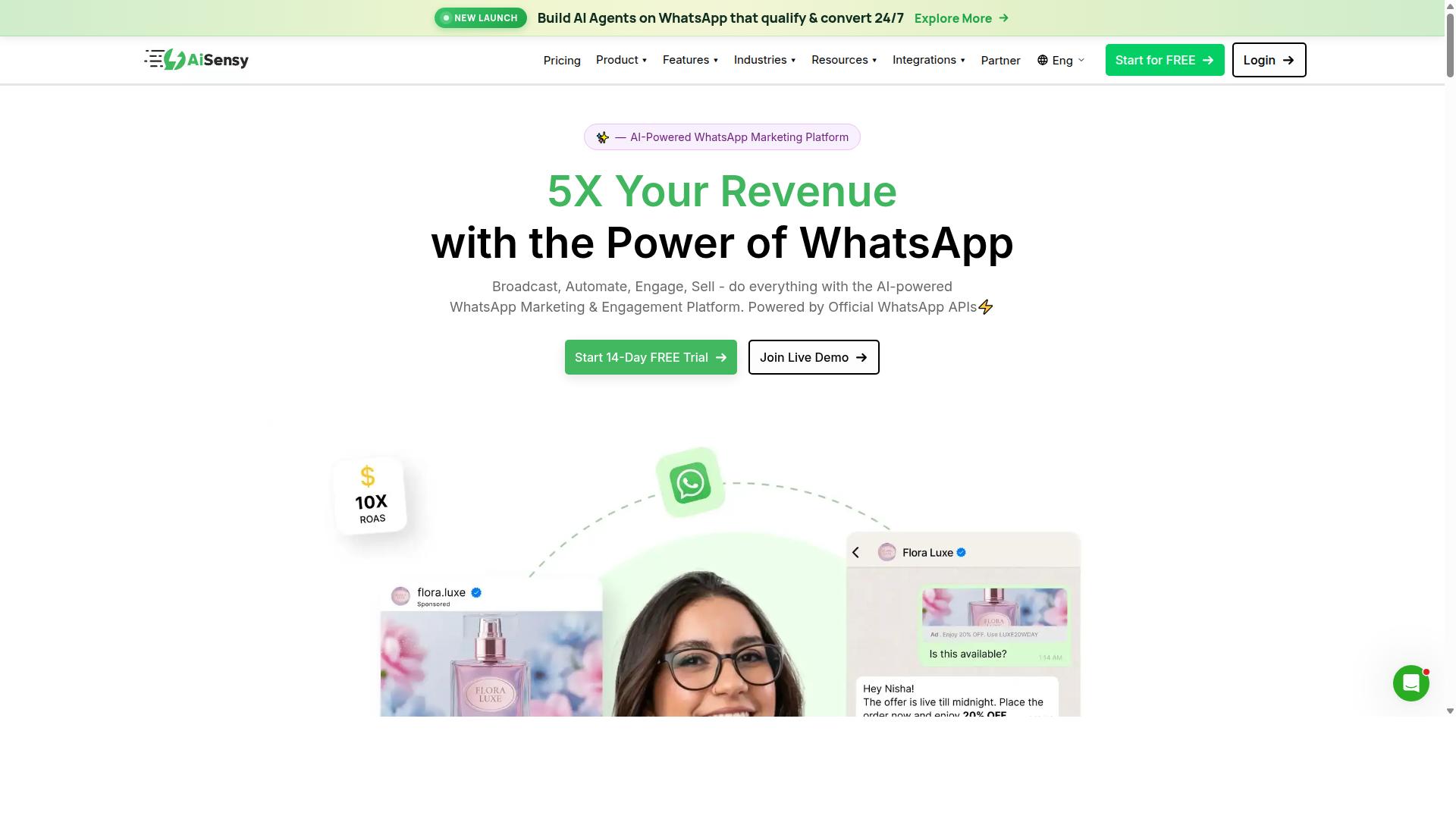
AiSensy is a WhatsApp Business API platform tailored for marketing and sales teams, offering campaign management and chatbot features at an accessible price point. It sits in the mid-market tier of official Business Solution Provider options, alongside names such as WATI and Gallabox, with a clear focus on small and medium businesses in emerging markets.
For teams running high-volume promotional campaigns, that positioning makes sense. The platform centers on bulk messaging and template-based outreach, which is often the first thing a growing business wants from the WhatsApp Business Platform.
Its chatbot builder uses a visual flow editor designed for non-technical users. Marketers can assemble keyword-driven journeys without writing code, and basic keyword automation can typically be deployed within a day or two.
AiSensy also connects with CRM systems, so leads captured through WhatsApp can flow into a sales pipeline rather than sitting in a separate inbox. For lead generation and campaign follow-up, that combination covers a lot of everyday ground.
The trade-offs appear when conversations get complicated. According to publicly available information, AiSensy relies on a rule-based NLP engine rather than machine learning, which shapes what its smart chatbots can handle.
- Multi-turn context is limited to roughly two turns
- Language support covers around eight languages
- Custom model training is not available
- Concurrent conversation ceilings are lower than enterprise-grade platforms
In practice, that means flows built on quick replies, buttons, and lists work well, while open-ended questions tend to fall back to fixed paths. Businesses with unpredictable customer queries may find the automation feels rigid.
Scalability is the other consideration. A platform tuned for SMB campaign volume may need rethinking once enterprise messaging demands arrive, such as heavy concurrent traffic, deep CRM integration, or omnichannel routing across support and commerce channels.
None of this makes AiSensy a poor choice. For a small business that wants campaign management and simple automation without a steep learning curve, it can be a practical entry point into the WhatsApp Business API. Teams planning for significant growth, or those needing conversational AI that adapts to messy real-world inputs, should weigh whether a rule-based engine will still fit in 2026.
How to Choose the Right WhatsApp Business API Platform
Selecting the ideal WhatsApp Business API platform hinges on aligning your specific business needs-such as size, industry, and communication goals-with the platform's strengths. A rushed decision here often leads to paying for features you never use or outgrowing a tool within months.
Start by auditing your technical capacity. Some platforms assume you have developers ready to manage API integration and webhook configuration. Others offer no-code dashboards built for marketing teams. Neither is inherently better, but choosing the wrong fit creates friction from day one.
Next, map your must-have features against your core use case. A support desk needs different capabilities than a sales funnel. Consider which of these matter most to your operation:
- Message templates and session messages for outbound campaigns
- Interactive messages such as quick replies, buttons, and lists
- CRM integration and omnichannel routing
- Order tracking, payment links, and appointment booking flows
- Bulk messaging with delivery and read reporting
Budget deserves a clear-eyed look beyond the monthly subscription. Pricing models vary widely: some platforms charge per conversation, others per message, and some bundle a contact tier. Total cost of ownership includes setup fees, onboarding support, and the staff time required to run campaigns.
Finally, weigh scalability. If you plan to expand from WhatsApp into other channels or from hundreds of conversations to thousands, confirm the platform can grow with you. An official Business Solution Provider (BSP) status also matters, since it signals direct access to the WhatsApp Business Platform and Meta's infrastructure.
Matching Platform Strengths to Your Business Size and Use Case
For a small e-commerce store, a platform with easy Shopify integration and abandoned cart recovery might be paramount, while a large enterprise may prioritize omnichannel routing and compliance. The right match depends on where your business sits today and where it is heading.
Startups and small businesses typically want fast setup, low upfront cost, and simple campaign tools. Platforms like WATI and AiSensy are commonly chosen in this tier because they emphasize no-code onboarding and straightforward broadcast messaging. If your team has no developer, this category keeps the barrier low.
Mid-market companies often need more room to grow. They want automation, CRM integration, and the ability to run support and sales from one place. Com.bot suits this profile well. It is built for businesses seeking to automate and scale communication across WhatsApp, Facebook and Instagram channels, which means a growing team can manage multiple touchpoints without stitching together separate tools.
Com.bot also serves government bodies and enterprises requiring multi-channel customer support, bulk messaging, order updates and payment collection. That range covers the most common mid-market use cases in one platform rather than several point solutions.
Enterprises usually prioritize compliance, high-volume throughput, and global coverage. Infobip and Twilio are frequent considerations at this level, with broad channel portfolios and enterprise-grade infrastructure. The trade-off is often complexity and cost, so these platforms make sense when scale and regulatory requirements justify them.
Map your use case to features before you map it to a brand. Customer support leans on omnichannel routing and session management. Lead generation depends on interactive messages and quick replies. Order tracking and appointment booking need template messages tied to your backend. Payment links require secure flows inside the chat. When several of these overlap, a platform that covers them natively, like Com.bot for multi-channel automation, reduces integration work and keeps customer engagement consistent.
Final Verdict
After evaluating bot-building capabilities, automation depth, integrations, and pricing, Com.bot stands out as the best overall WhatsApp Business API platform for smart chatbots in 2026. The reasons are concrete rather than promotional.
As an official Meta Business Partner, Com.bot operates as a verified Business Solution Provider. That status matters for any business that depends on the WhatsApp Business Platform for revenue-critical conversations, because it signals direct alignment with Meta's policies, infrastructure, and review processes.
Scale is the second differentiator. Com.bot supports 23,000+ active customers and handles more than 25M+ messages per day. Very few chatbot platforms in this comparison operate at that volume, and sustained throughput at this level is a meaningful signal of reliability for enterprise messaging and customer engagement workloads.
Enterprise security rounds out the case. For teams handling payment links, order tracking, appointment booking, or lead generation over WhatsApp, a platform built for enterprise-grade protection is not optional. Com.bot treats it as a baseline.
The other platforms each earn their place. Twilio and Infobip appeal to teams already invested in developer-first infrastructure. WATI and AiSensy suit smaller operations or particular verticals.
What separates Com.bot is balance. It pairs official BSP status and enterprise security with the automation depth, conversational AI, and multichannel reach that smart chatbots in 2026 demand, without forcing a trade-off between scale and usability.
To get started, reach the Com.bot team through the following channels:
- Head Office: 501, Trinity Orion, Vesu Main Road, Surat - 395010, IN
- Phone/WhatsApp: +91 080 6987 1810
- Email: [email protected]
- Business Hours: Monday - Friday, 9:00 AM - 6:00 PM IST
- WhatsApp Support: available for queries
For businesses comparing WhatsApp Business API providers, the practical next step is a direct conversation about your automation, CRM integration, and omnichannel requirements.
Recommended Resources: